Sports Mouthguards: What Kamloops Parents and Adult Athletes Need to Know
From early-morning hockey practices to fall soccer, basketball, mountain biking, and weekend rec leagues, Kamloops is a community that loves to move. A well-fitted helmet, the right footwear, and the proper equipment are part of showing up prepared. One small piece of protective gear deserves more attention than it usually gets: the sports mouthguard.
A mouthguard is not just for elite athletes or high-contact sports. It is a simple, practical layer of protection for teeth, lips, cheeks, and jaws when a fall, elbow, ball, stick, or unexpected collision happens. At Mighty Molar, we want to help families and active adults make confident choices before the season gets busy.
Who Should Wear a Mouthguard?
Anyone participating in a sport where a blow to the face is possible should consider one. That includes obvious contact sports such as hockey, rugby, football, lacrosse, and martial arts, but it can also include basketball, soccer, baseball, skateboarding, cycling, skiing, and mountain biking.
Kids need a reminder, too. It is easy to treat mouthguards as optional when they are packed at the bottom of a sports bag, but consistent use matters. The right time to wear a mouthguard is before the unexpected happens—not after.
What Makes a Mouthguard Protective?
A good mouthguard should feel comfortable, cover the teeth it is designed to protect, stay in place without constant biting or clenching, and allow the wearer to breathe and speak reasonably well. If it feels bulky, loose, or painful, it is less likely to be worn correctly during the moments that matter.
There are several types available, including stock guards, boil-and-bite guards, and custom-made guards. The Canadian Dental Association notes that a properly fitted mouthguard is more comfortable and therefore more likely to be in position at the time of impact. Custom guards are often the best fit, especially for athletes who wear braces or play a higher-risk sport.
Braces Change the Fit
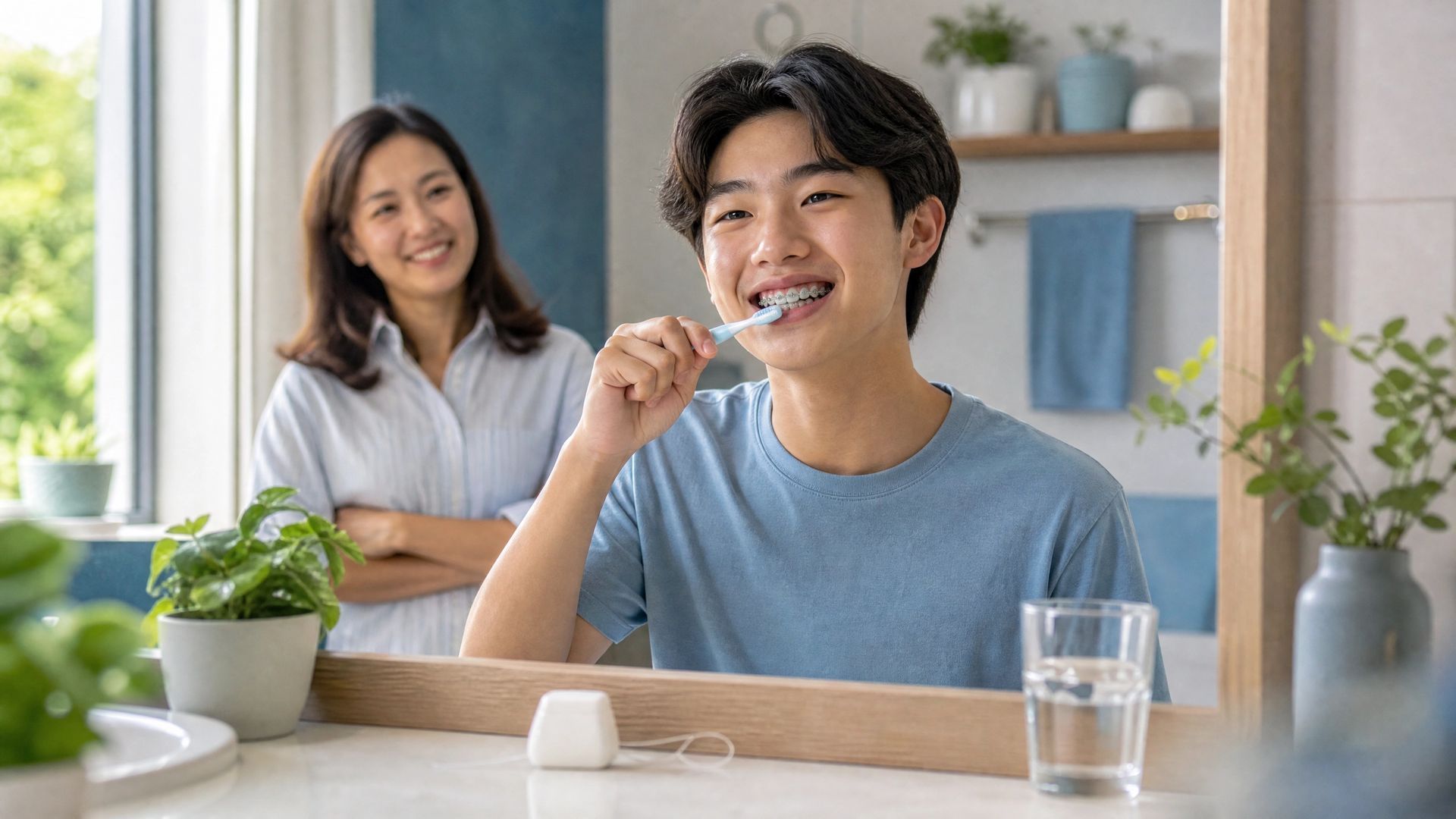
If your child or teen has braces, do not simply use an old mouthguard that was made before treatment began. Teeth move during orthodontic care, and wires and brackets add another reason to choose an option designed for that stage of treatment. Ask the orthodontic provider about the best guard for their current setup.
A mouthguard can help protect soft tissues from brackets during an impact, but it is not a replacement for helmets or other sport-specific protective equipment. Think of it as one important part of a wider safety plan.
How to Care for It Between Games
A mouthguard spends a lot of time in a warm, damp environment, so a little care goes a long way. Rinse it with cool water before and after use, let it air-dry completely, and store it in a clean ventilated case. Do not leave it in a hot car, toss it loose in a gym bag, or clean it with boiling water unless the manufacturer gives clear instructions to do so.
Bring it to your hygiene appointment if you have questions about fit, wear, or cleaning. A guard should be replaced when it is torn, chewed through, warped, no longer fits properly, or feels uncomfortable. Growing kids and people in orthodontic treatment may need replacements more often as their mouths change.
Small Gear, Big Peace of Mind
We hope every season is full of high-fives and good memories, not preventable injuries. Taking a few minutes to check your mouthguard before the first practice is a simple way to protect your smile while you enjoy the sports you love.
Want another set of eyes on your sports mouthguard or your family's preventive routine? Book a hygiene appointment with Mighty Molar and let’s help you keep every smile game-ready.